

Cambridge Reaffirms Commitment to Civil Rights, Honors Gloria Richardson and 1963 Movement

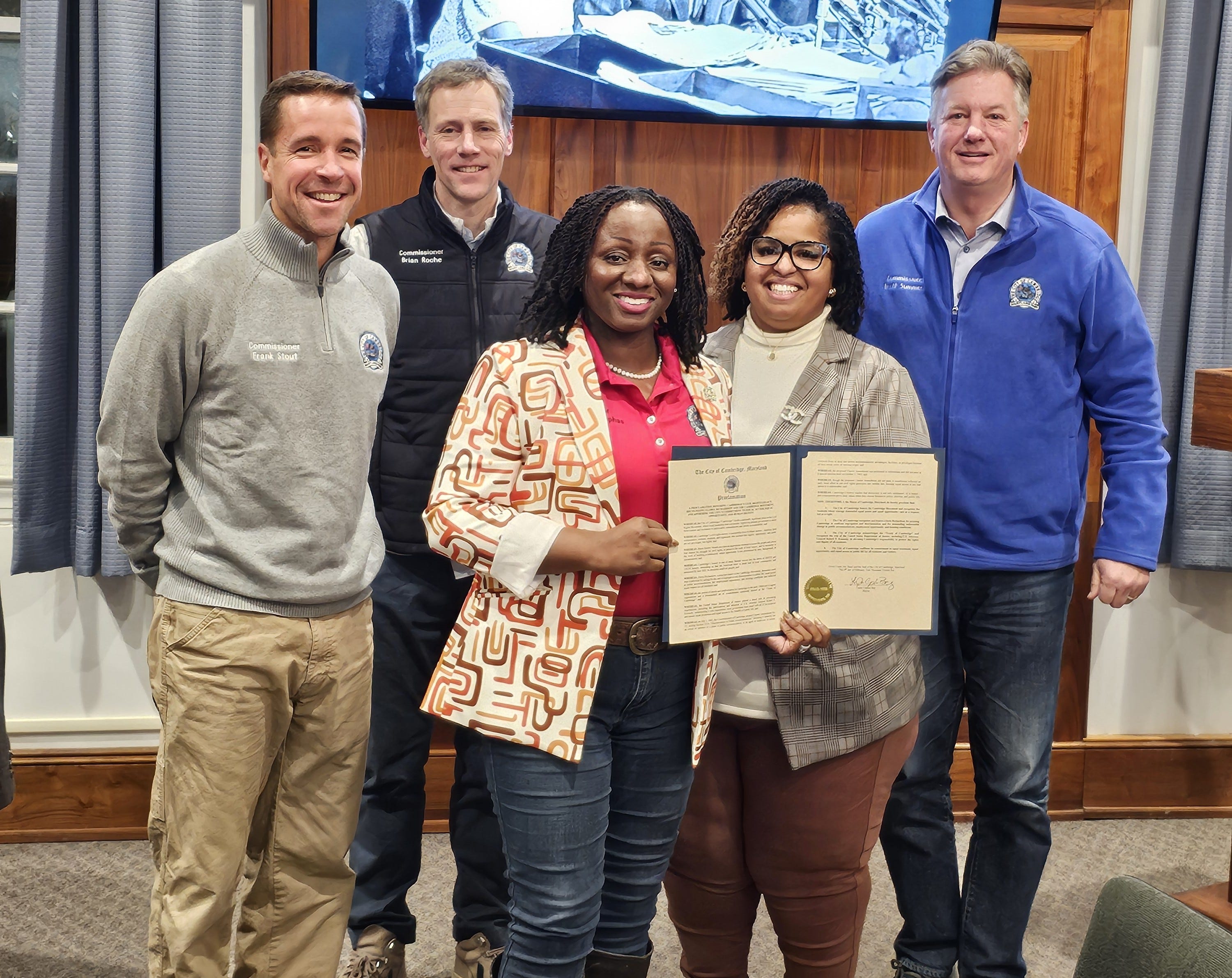
More than six decades after the long, hot summer that placed Cambridge at the center of the national civil rights struggle, city leaders formally renewed their commitment to equal access and human dignity during Monday night’s City Commission meeting.
Mayor Lajan Cephas-Bey read a proclamation into the record recognizing Gloria Richardson and the Cambridge Movement and affirming the city’s responsibility to ensure equal opportunity for all residents and visitors.
The proclamation, dated Feb. 9, 2026, declares that Cambridge “holds a nationally significant place in the Civil Rights Movement” and honors the local leadership that pressed government at every level to move from exclusion to enforceable change.
The document states that Cambridge’s history is “woven into the fabric of MD250 and US250 history,” underscoring that the American story is lived out in local communities and measured by how fully its promises reach all people.
It further notes that Cambridge’s civil rights history is inseparable from its Black history, crediting families, faith communities, workers, students, and organizers who insisted that dignity, opportunity, and safety are rights, not privileges.
Black History Month, the proclamation states, provides an appropriate moment to honor those contributions, preserve the truth of local history, and recommit to building a community where opportunity is not determined by race, background, or circumstance.
At the center of that history is the 1963 Cambridge Movement, led by Richardson, which demanded desegregation of public facilities, fair employment practices, and improved housing conditions.
Months of protests and unrest in 1963 led to negotiations between local Black leaders and officials at the local, state, and federal levels. On July 1, 1963, the Commissioners of Cambridge adopted Charter Amendment No. 15, adding Section 127A, “Discrimination in Public Accommodations,” to the city code.
The amendment made it unlawful for an owner, operator, or employee of a place of public accommodation to refuse, withhold fro,m or deny any person accommodations, advantages, facilities, or privileges because of race, creed, color, or national origin.
The resolution defined public accommodations to include hotels, restaurants, inns, motels, and establishments regularly engaged in providing sleeping accommodations or serving food.
Bars, taverns, and cocktail lounges were excluded under the language adopted at the time. Violations were subject to misdemeanor penalties, and the amendment was set to take effect Aug. 20, 1963.
With assistance from the U.S. Department of Justice and the involvement of U.S. Attorney General Robert F. Kennedy, negotiators finalized what became known as the “Treaty of Cambridge” on July 23, 1963.
The agreement included the appointment of a Human Relations Commission with four Black members, the hiring of a Black interviewer for the Maryland Department of Employment Security in the Cambridge office, desegregation of the first four grades in the Dorchester County school system by September 1963, and commitments to pursue low-rent public housing to benefit the Black community.
Representatives of the Black community agreed to suspend protests and demonstrations to maintain cooperation. However, Charter Amendment No. 15 was later petitioned to a referendum and failed at the ballot box. As public accommodations remained a central concern, unrest resumed, and the Maryland National Guard remained deployed in Cambridge for approximately two years.
The proclamation acknowledges that Cambridge’s history demonstrates that democracy is not only celebrated but tested, and that communities prove their values when they choose fairness in policy, practice, and public life.
By issuing the proclamation, the city honors the Cambridge Movement and recognizes the courage required to achieve equal access and equal opportunity. It specifically recognizes Richardson for pressing Cambridge to confront segregation and discrimination and for demanding enforceable change in public accommodations, employment opportunity and housing conditions.
The city also acknowledges the Treaty of Cambridge and the role of the U.S. Department of Justice in elevating Cambridge’s responsibility to protect the rights and dignity of all residents.
The proclamation concludes with a reaffirmation of the city’s commitment to equal treatment, equal opportunity, and equal access in public life.
The document was signed by Mayor Cephas-Bey and sealed by the City of Cambridge on Feb. 9, 2026.